USE CASE · SALES KICKOFF
A sales kickoff where the team practices the strategy
A new strategy is not yet a practiced habit. Give the team a customer situation where it has to apply the message, make trade-offs and explain its decisions before the next live opportunity.
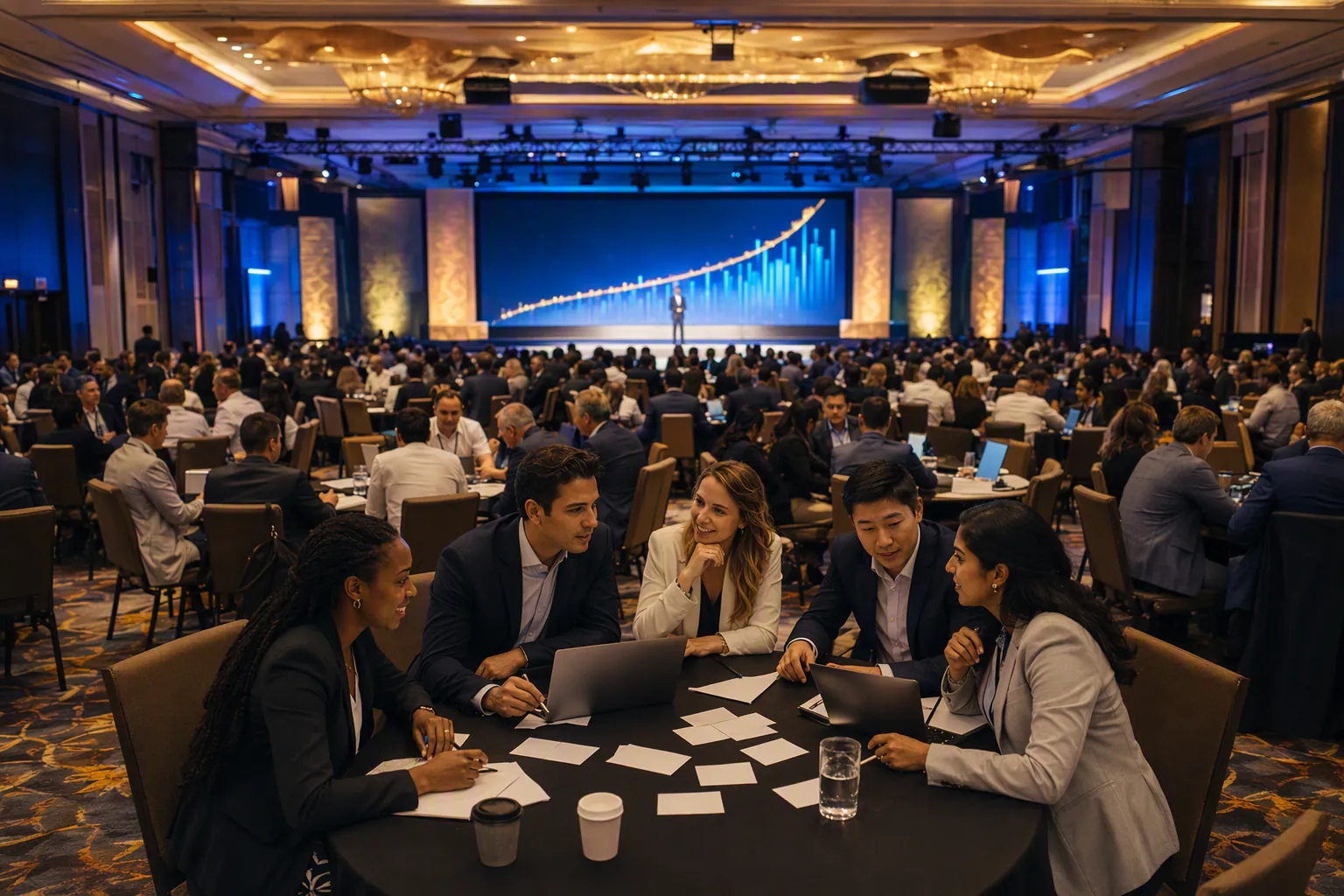
Start with one behavior you want teams to practice
Choose the decision gap before choosing an activity. Perhaps the new strategy requires stronger customer discovery, more disciplined qualification or better collaboration with specialists. Describe what participants should be able to do differently after the meeting.
A simulation works when that behavior affects the customer situation. A kickoff about a new value proposition should ask teams to discover which customer problem it solves, not merely repeat a tagline. Agree what evidence will tell the facilitator whether teams attempted that behavior.
Fit the rehearsal into the meeting
Connect the customer scenario to the themes introduced by the leadership and product sessions. Give participants enough context to act, then let teams make their own choices before revealing outcomes or discussing a preferred approach.
Protect time for the debrief. A lively game without reflection can leave the audience remembering the leaderboard rather than the strategy. Agree the introduction, rounds, breaks and discussion with the trainer instead of treating the simulation as an isolated entertainment slot.
Make participation a team task
Mix roles or experience levels deliberately when shared understanding is the objective. Teams need to decide who investigates, which stakeholder deserves attention and how to use limited resources. The conversation inside each team is part of the practice.
The trainer observes choices and uses the simulation record to select debrief questions. Do not assume every participant had the same role or learning experience simply because the team achieved a high score. Invite quieter specialists to explain evidence and reasoning.
Prepare the session before the room fills
Review the scenario against the audience and approved business context. Check devices, network access, invitations and facilitation arrangements. Use a dry run to identify confusing instructions or assumptions about prior knowledge.
- One clear learning objective and a reviewed scenario
- An agreed agenda and facilitator responsibilities
- Participant access, device and connectivity checks
- A planned debrief and a practical follow-up action
Carry a rehearsal insight back to work
Finish by asking teams to identify one assumption to test with a customer and one coordination habit to change. Capture the reason and owner, rather than only collecting general enthusiasm about the event.
If you need evidence of business impact, plan a separate follow-up measurement with an appropriate baseline. Attendance, participation and simulation scores alone do not demonstrate revenue uplift. Discuss the delivery and measurement plan together when evaluating the workshop.
Questions before you start
Is this a voice or cold-call coaching tool?
No. SalesNail focuses on decisions across a complex B2B deal, limited resources, team collaboration and facilitator-led debriefing. Conversation practice can complement it, but the platform is not presented as a voice-scoring service.
Can we evaluate it before arranging a workshop?
Chapter 1 of The Second Curve is free without sign-up. It demonstrates individual narrative and decision mechanics, not the complete facilitated team workshop. Discuss your team objective and delivery requirements separately.
Can this replace the entire kickoff agenda?
Not automatically. Design the simulation as a purposeful segment connected to the meeting objective. Leadership communication, product updates and individual practice may still have their own roles.